Software development tailored to your needs
Agentic AI is turning custom software development from a process-heavy discipline into one driven by business needs. Specialized AI agents can each work on their own part of the solution and hand tasks over to one another, while our developers manage the process and ensure the quality of the work as it progresses.

Software development
From generic functionality to software development that reflects your core business
Many workflows can be supported by off-the-shelf software, and there is much to be gained from adapting to standard processes.
However, some tasks and business needs are so specific to an organization that they are best supported by custom software.
Through software development, we help you digitize the parts of your business that make you unique. This is not a static process. Your ability to continuously translate requirements, needs and ideas into digital solutions helps define how quickly and efficiently you can adapt and implement new workflows.
The approach is largely agent-driven. We use agentic AI to build development capacity within your organization. This enables you to develop custom software with fewer resources – software that you can take ownership of and continue to run yourselves.
Our custom software deliverables
Custom applications
We work primarily with Microsoft and .NET technologies and develop both web and mobile applications. Where appropriate, we also use the Power Platform and low-code to build the solution, or at least part of it. Our developers build the solution and see it through all the way to deployment.
Quality assurance & test automation
We test the solution on an ongoing basis and automate those tests that can be usefully repeated whenever the code is changed. This provides faster feedback during the development process and greater assurance that existing functionality continues to work as the solution is modified and further developed.
Complexity is not a mark of quality
In software development, there’s rarely just one technical path to the goal. On the contrary, frameworks, technologies, components, services and architectural choices provide developers with a vast catalog of options from which to choose.
However, that does not mean that everything in the toolbox needs to be used. Every time you add something, it also makes the solution a little more complex. And complexity in a system landscape has a tendency to spread – often unintentionally.
The more parts that have to work together, the more things there are that could go wrong. This places more and more demands on the developers who will later have to understand, test, debug and further develop the solution. A technically elegant solution on the drawing board can easily end up being unnecessarily cumbersome to work with.
At Darize, we keep complexity at the level the task requires. We consciously choose the simple solution when we know it will solve the task just as well. And we avoid building for hypothetical needs that may never arise.
The desire to minimize complexity is not an argument for building simply at any cost. Business-critical solutions can be complex because the task they are designed to solve is complex.
We’d rather remove components and streamline a solution than bloat it unnecessarily, simply because we can.
- Cases

- AI and Data
- Public Sector and Defence
October 4, 2026
AI-powered search improves the quality of environmental assessments
AI-powered search improves the quality of environmental assessments
- Cases

- Custom Software and Modernization
October 6, 2026
DEGEN: A Token-Driven Social Platform Supports Rapid Growth
DEGEN: A Token-Driven Social Platform Supports Rapid Growth
- Cases

- Custom Software and Modernization
- Manufacturing
September 25, 2026
Michelin: A Global HR System Improves Workforce Management
Michelin: A Global HR System Improves Workforce Management
- Cases

- Custom Software and Modernization
- Financial Services
October 6, 2026
Legacy Systems Ready for Cloud Transformation
Legacy Systems Ready for Cloud Transformation
- Cases
- Custom Software and Modernization
- Public Sector and Defence
September 24, 2026
Kemidata – new exhibition portal for the Danish Environmental Portal
Kemidata – new exhibition portal for the Danish Environmental Portal
- Cases

- Custom Software and Modernization
- Public Sector and Defence
September 24, 2026
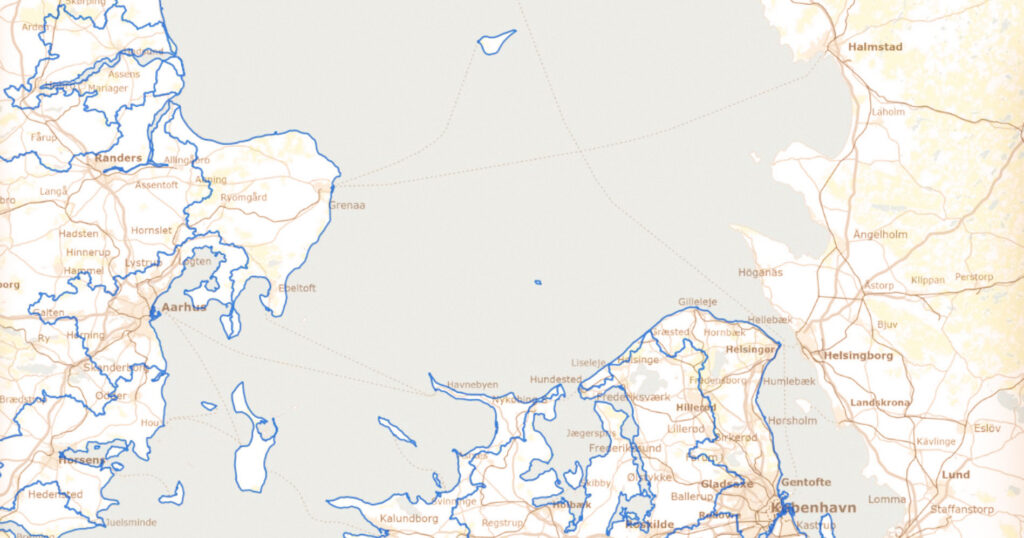
Nature database – strengthening the work to protect Danish natural resources
Nature database – strengthening the work to protect Danish natural resources
- Cases
- Custom Software and Modernization
- Public Sector and Defence
September 24, 2026
Swiss Army knife solution MARS turns green political ambitions into concrete action
Swiss Army knife solution MARS turns green political ambitions into concrete action
- Cases

- Custom Software and Modernization
September 23, 2026
Deltek: A Modern Platform Supports Enterprise Growth
Deltek: A Modern Platform Supports Enterprise Growth